


The Solution is Us Helping Us: The Journey to Create The Missing Black Woman Disparity Toolkit
The Missing Black Woman Disparity Toolkit resource discussed in this blog can be found here: https://www.nanwashingtonfoundation.com/missing-black-woman
When I was 10 years old, I was almost kidnapped while living in Oakland, California. A man approached me and said, "ey, little girl, I have something for you in my car." My response was to yell out, "No thank you!" and immediately run. Later that evening, my mother and uncle went looking for the man who attempted to abduct me. Their actions made me feel deeply loved and cared for, and my experience was that people were willing to try to get justice for someone like me. However, as a social worker researching the disparities when Black women go missing, I found that this was not always true. I also learned that society did not care about me the way it might care about a child of a different ethnicity.
Two weeks before I began my doctoral program at California Baptist University, someone sent me an article about Mitrice Richardson, a Black woman who had a mental health issue while having dinner in Malibu, California. The restaurant called the police. The police took her in. They spoke to her mother, who asked whether she needed to drive up to Malibu Canyon in the dark to pick her up. They assured her that they would hold Mitrice until the morning. However, she was released in the middle of the night with no phone, jacket, or purse. Her body was found months later.
I felt frustrated and angry when I heard about this story because I didn't know about it when it happened in 2009. I graduated from Clark Atlanta University and was back home in California as of 1996. How did I live in Los Angeles County and not know about this Black woman who went missing? Mitrice is the reason I started researching this topic. As I searched for articles about missing Black women, I noticed there was very little information. I had to search for a term, focused on white women, coined by journalist Gwen Ifill. We were not even centered on our own issue. This inspired me to coin the term Missing Black Woman Disparity (MBWD) to describe the lack of care and awareness in missing Black women cases.
According to my research, I started with 558 articles and narrowed them down to 10. Cases involving missing white women are more likely to be solved than cases of missing Black women. I wanted to identify the root cause and determine what we can do to solve this problem. I interviewed experts on MBWD and community members impacted by this issue, Ronnetta Rideout of Misogynoir Murders True Crime Podcast, Natalie Wilson of The Black and Missing Foundation, Ryan Sorrell, editor of the KC Defender, and Shalissa Collier, mother of Mikeona Johnson, a young Black woman who went missing on 9/9/2020 and was later found deceased. The findings summarized that Black women are not likely to be found by the media or law enforcement; the community will find them. Therefore, the solution is "us helping us."
My motivation to find a solution increased after Ronnetta Rideout, and I assisted Miss Shalissa Collier in creating a Mother's Brunch. Her mother decided she wanted to give back to other mothers who lost their daughters to Domestic Violence and missingness. During the Mother's Brunch, I presented my research, and the community responded that they need more information on this topic to understand better how to help find missing Black women. Then there was also a teen who went missing in an affluent Black community. They did not know how to help find her.
This led me to create the Missing Black Woman Disparity Symposium, which was held on March 23, 2024. To set the mood and intentions for the day, there was a sound bath by Ceremoni Sounds. Attorney Jada Moss and Dr. Danielle Slakoff discussed their groundbreaking research. We welcomed family members of missing Black women to share their stories and had law enforcement discuss ways to work with them. We also had Misogynoir Murders, Black Girl Unlost, and Black Girl Missing Podcast discuss their podcasts and YouTube channels, and how they remain ethical in their storytelling. Activist Kathy Evans discussed how she supports families of missing Black women, including the family of Mitrice Richardson. Dr. Brittany Lewis, who passed legislation for missing and murdered Black women in Minnesota, presented, as well as Dr. Sharon Burton, who talked about cybersecurity and ways to keep yourself and your family safe. We also had our community partner, Pastor Tyrone Phillips, discuss how the church could be more involved.
I took all the information from this symposium and created the MBWD toolkit. By either going to www.missingblackwoman.org or scanning the QR code, the community obtains resources to find not just missing Black women but any missing person.
I disseminate the Toolkit daily by dropping a photo of it into the comments on social media posts about missing people. I have received feedback that my comments are often hidden on some platforms, but I don't let that discourage me from continuing to spread the word. I also give ongoing presentations for different agencies, trying to reach as many people as possible. I hope that the Toolkit will be saved by everyone who sees it and that they share it as they hear about missing people.
I aspire to increase the number of churches that use the MBWD Toolkit. We have expanded our partnership with Because We Believe Ministries, led by Pastor Phillips, and they play our video toolkit during the weekly announcements during their Sunday service. They also post the Toolkit at gas stations and on social media, and educate their congregation about people who are missing in their community. I also aspire to increase our donations so we can allocate more resources to share the Toolkit in schools, airports, on billboards, and in other high-traffic areas.
The Toolkit currently focuses on the United States; however, we want to add resources from different countries around the world. Resources can be emailed to info@missingblackwoman.org.

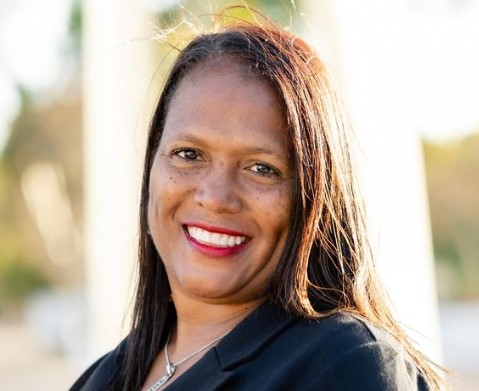
Writer: Dr. Kasey Phillips Brown is the executive director of the Nan Washington Global Wellness Foundation and the Missing Black Woman Disparity Symposium. She is a clinical supervisor, previous part-time college lecturer, owns a private practice, New Perspectives, and is the author of “We Just Said No! Treating ADHD Without Medication.”


Comments