top of page


RESEARCH BLOG.
Use the search bar at the top to look for specific posts/topics.


The Solution is Us Helping Us: The Journey to Create The Missing Black Woman Disparity Toolkit
The Missing Black Woman Disparity Toolkit resource discussed in this blog can be found here: https://www.nanwashingtonfoundation.com/missing-black-woman When I was 10 years old, I was almost kidnapped while living in Oakland, California. A man approached me and said, "ey, little girl, I have something for you in my car." My response was to yell out, "No thank you!" and immediately run. Later that evening, my mother and uncle went looking for the man who attempted to abduct me
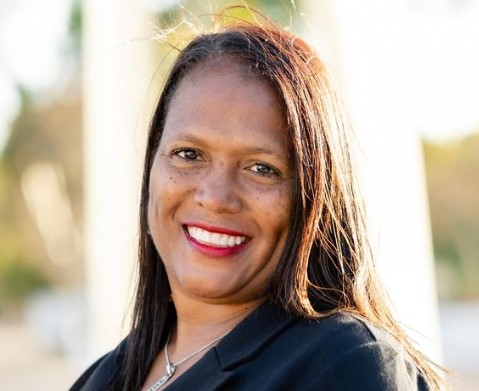
Kasey Phillips Brown


Music Activism and Missing Children: Lessons from the “Runaway Train” Video 30+ Years Later
As some children/youth do, sometimes without much thought, I would run away from home. These bouts of running off were not rebellious, but were, at times, moments when I was overwhelmed by my home environment or, in one case that I can recall, when I wanted to go swimming at the local swimming pool, even when that trek involved crossing the highway. In hindsight, I consider it fortunate that a neighbour found me stuck in a wrought-iron fence alive and well, though not surpris
Kelsey Konjolka


Quashing Some Myths About Missing Persons
The field of missing persons contains many myths. Why, you may ask? First, missing person cases are often discussed in the context of serial murders, vanishings, mystery, and crime in the public sphere. This has been the result of, and has led to the creation of, many podcasts , web sleuths, and true crime shows. One can imagine that these do not always involve credible and verified information. Yet, these sources are some of the most consumed forms of content in Canada and

Lorna Ferguson


How do we identify human remains?
The case of a surgical implant found inside a Queensland crocodile has highlighted the challenges forensic scientists face when trying to identify human remains without much evidence to go on. Did the crocodile eat a human with a surgical implant? If so, could the implant — a metal plate and some screws — be used to identify the victim? Or did the implant come from a dog? Death by crocodile is reasonably rare. In the past decade, there have been about 67 crocodile attacks i

Jodie Ward


‘No one is truly there to help’: why so little is known about the reasons people go missing
As part of new research into missing persons in Australia, I have been asking people who return after disappearing what they needed or wanted. Mary, who has gone missing four times in the last few years, responded, I just wanted someone to ask if I was OK when I came back. Voices like Mary’s are not often heard, nor are their problems understood, when we talk about the mystery and intrigue of missing persons cases. Every hour in Australia, 100 police reports are generated abo

Sarah Wayland


The Power of Stigma: How does Self-Ageism Contribute to Missing Occurrences?
Over the course of the COVID-19 pandemic, many of us have watched in horror as harrowing outcomes have been documented in long-term care across Canada, reminding us that our social programs to support the aged need to be strengthened, revamped, and even reimagined. Equally revealing is that in the early days of the pandemic, we witnessed countless evasions to public health restrictions, with people refusing to wear masks or hosting large gatherings because “the virus only aff

Larissa Kowalski


Check Your Sources – What the Public Needs to Know About Missing Persons Data
I am writing this blog in follow up to Lorna Ferguson’s insightful post from January 26, 2021: “We Need Usable National Data on Missing Persons, Now” . As an investigator, I lose sleep over missing persons. Having shared a small part of the story of hundreds of families, I feel the pain associated with each one and feel helpless when there is nothing I can do to resolve it. Even though I have been fortunate enough not to have personally experienced this type of ambiguous loss

Cpl. Jennifer Sparkes


Missing Children Publicity Appeals: Are They Effective?
When a child goes missing it is a common approach for law enforcement, charities, and the family and friends of that missing child to create a public appeal in the hope that a member of the public has some information on the child’s whereabouts. These appeals may be distributed in numerous locations such as newspapers and shop windows, but more commonly distributed through social media sites such as Facebook, Twitter and, more recently, TikTok. Online publicity appeals allow

Dr. Daniel Hunt


Who is a missing person at high risk in Sweden?
In Sweden, the search for high-risk missing persons is a police task based on the Act of Civil Protection — the law which states the responsibilities the municipalities and the Crown have for protection, risk reduction, and rescue from accidents and imminent danger to people, property, and the environment. However, the police’s task does not include the rescue of the found, former missing person, as this is typically a task for the fire department or the ambulance. Every year

Rebecca Stenberg


What defunding the police could mean for missing persons
In the wake of sustained protests and calls to defund police forces, cities across North America have been busily engaging in police reform. While this is a development some might applaud, it’s imperative to remember that much of this activity is occurring in a complete vacuum of evidence and policy. There’s little research to suggest that many of the social programs likely to be funded in place of police forces will do much to reduce the social problems that have become poli

Laura Huey


Views From The Geographic Profiler
Between 70-80,000 people are reported missing in Canada each year, including more than 50,000 children. Despite these numbers, there are only a handful of dedicated missing persons units within law enforcement across the country. Toronto, Canada’s most populous city, only recently established a missing persons unit in 2018 following the arrest of serial killer, Bruce McArthur, and the inaction towards the missing people within the LGBTQ+ community. Following the cases of Robe

Douglas MacGregor


Some Personal Thoughts on Forensic Anthropology and Missing Persons Cases
My work as a forensic anthropologist in Ireland brings me into contact with the remains of those generally described as 'the missing.' Missing persons – or misper as they are often called in Search and Rescue jargon – may have gone missing for various reasons. In most cases, they are found alive and well relatively quickly. However, other cases may turn into long-term missing cases and even missing-presumed-dead cases. Reasons for going missing vary greatly and can range from

Dr. René Gapert


Should Police Search and Rescue (SAR) Be Recognized as a Specialized Unit?
What comes to mind when I say the phrase specialized police unit? Police dogs? Homicide detectives? The gang unit? Perhaps foot patrol or officers on horseback? All of these are common specialized police units—and there are many others besides. But what makes a unit a specialty unit? What differentiates them from general patrol? Overall, specialized police units fall into one of three categories: Units specializing in a particular patrol method . Most common among these types

Janne E. Gaub


How do we manage the risks of getting lost among persons with dementia?
The rates of dementia are on the rise as populations age. More than 747,000 Canadians are living with dementia, with the prevalence expecting to more than double every 5 years. Spatial navigation challenges are common among this population, and this puts them at a high risk of getting lost and going missing ( Puthusseryppady et al., 2020 ). In Canada, there has been a reported increase in the number of cases involving a person living with dementia, attributing to approximate

Noelannah Neubauer


The right to be forgotten and missing persons on social media
Social media has become very prominent as a tool in the search for missing persons. Social media platforms such as Facebook, Twitter, Instagram, Snapchat and more recently TikTok are being used to raise awareness for issues regarding missing persons and searching for those who have gone missing. Publicity appeals aim to elicit information to help locate the missing person, to appeal directly to the missing person to make contact, to support families, to raise awareness of the

Simona Ciobotaru


Current State of the Literature on Risk Factors for 'Going Missing'
Previous research has predominantly examined the risk factors for ‘going missing’ by uncovering various demographic and psychopathological factors that place an individual at high risk for going missing to reduce and prevent these incidents through risk assessments and targeted interventions. Scholarship has attempted to account for some social and environmental impacts, classified as 'push' and 'pull' factors, that may influence a missing event ( Tarling & Burrows, 2004 ).
Lorna Ferguson


Missing Persons From The Families Perspective
When my youngest son, Daniel (28), went missing on November 3, 2011, I knew no one with a missing loved one, nor did I know anything about how the missing person process worked or what our family was up against. From this, I learned quickly that there is no supportive system and there are no standardized missing person procedures across Canada or regionally. Due to this, navigating through the process was unbearable, inconsistent, and unfair. This was not what I expected and

Maureen Trask


Recovering Missing People via Citizen Sightings
Photo by Ehimetalor Akhere Unuabona on Unsplash One way societies recover missing people is by recruiting citizens to search for them. Authorities and organizations use news alerts, posters, text message notifications, and more to ask the public to help be on the lookout for missing people. These person searches are typically prospective person memory tasks ( Lampinen et al., 2008 ), wherein the searcher has to remember to look for the missing person. Unfortunately, recoveri

Kara Moore


Toward intelligent systems to locate missing persons with dementia
According to the Alzheimer Society of Canada , more than 500,000 Canadians are currently living with dementia, and this number is projected to triple by 2050. In addition, 1 in 5 Canadians has experience caring for someone living with dementia. With these staggering numbers, it has become critical, now more than ever, to raise awareness about the needs of people living with dementia and their care-partners. The Challenge One of the most challenging issues related to care and

Sayeh Bayat


The Current and Potential Role of Crime Analysts in Missing Persons Work
This blog explores a project that John Ng is involved in regarding the current and potential role of crime analysts in missing persons work.

John Ng
bottom of page